
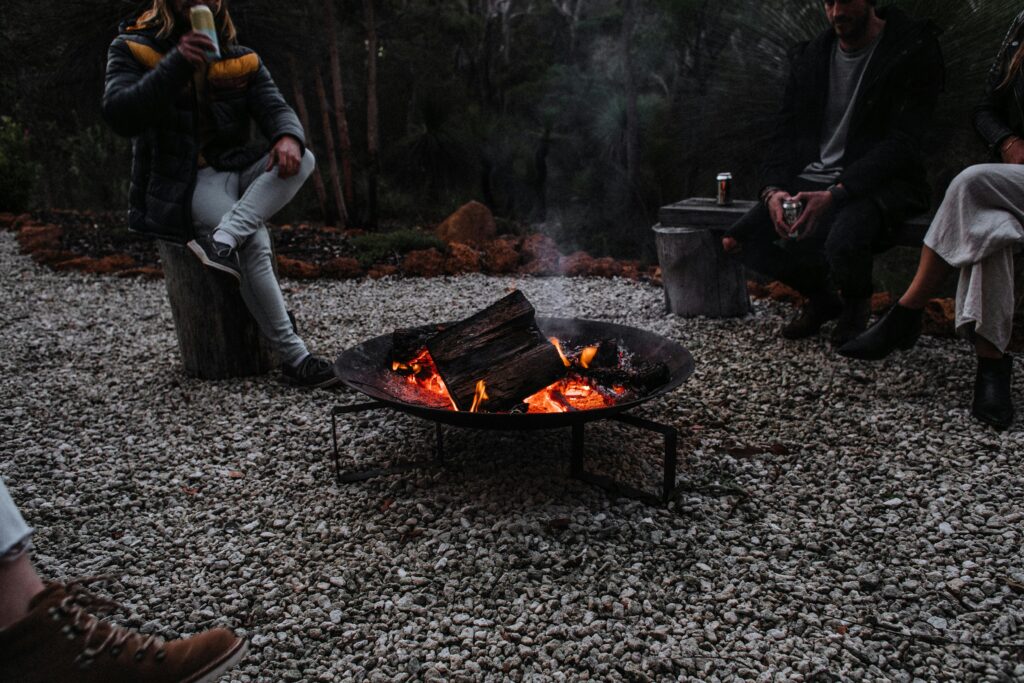
When you’re camping, fire is more than just comfort—it’s survival. Whether you’re trying to stay warm, cook a meal, or signal for help, mastering the art of starting a campfire under any condition is a skill every camper should have.
In this post, we’ll break down the best fire-starting techniques, tools to carry, and how to get a fire going in wet or windy conditions—so you never struggle to light a flame again.
The Three Components of Fire: Fuel, Heat, and Oxygen
Before diving into techniques, let’s get the foundation right:
- Tinder: Fine, dry material that catches fire easily (e.g. cotton balls, dry grass, birch bark)
- Kindling: Small sticks or twigs to build initial flame
- Fuel: Larger logs or wood that sustain the fire
Fire won’t burn without proper airflow—so space out materials to allow oxygen to circulate.
Technique #1: The Teepee Fire Lay (Beginner-Friendly)
Perfect for: Quick campfires, cooking, dry conditions
This method provides excellent airflow and is easy to light.
Steps:
- Place tinder in the center.
- Build a teepee shape with small kindling around it.
- Add medium sticks leaning against the structure.
- Light the tinder from the bottom—flames rise up.
Technique #2: The Log Cabin Fire Lay (Long-Lasting Burn)
Perfect for: Extended warmth, overnight fires, wind resistance
This structure burns more slowly and steadily.
Steps:
- Place tinder in the center.
- Stack kindling in a square pattern like a log cabin.
- Build 2–3 levels using progressively larger sticks.
- Light from the inside.
Bonus: Great for group camping where sustained heat is needed.
Technique #3: The Dakota Fire Hole (Stealth + Efficiency)
Perfect for: Windy conditions, stealth camping, survival
This below-ground method produces minimal smoke and shields the flame from the elements.
Steps:
- Dig two holes 6–8 inches apart and connect underground.
- Build a fire in one hole; the second acts as an air intake.
- Burn small sticks and cook over the flame safely.
🛑 Pro Tip: Only dig in areas where you’re allowed to disturb the ground.
Technique #4: Wet Weather Fire-Starting
Starting a fire in the rain? These tips will save your night:
- Use waterproof fire starters (e.g., fire cubes, cotton balls in Vaseline, magnesium shavings)
- Collect wood from dead branches up high—they’re usually drier than ground wood
- Shave damp wood to expose dry inner core
- Build a platform of sticks under your fire to keep it off wet ground
Always carry a ferro rod, stormproof matches, or a windproof lighter as backup.
Recommended Tools for Fast Fire-Starting
- Ferrocerium Rod (Ferro Rod) – Sparks at 5,000°F
- Magnesium Fire Starter – Shave and ignite easily
- Stormproof Matches – Light even in wind or wet
- Electric Arc Lighter – Rechargeable and windproof
- Tinder Kit – Store dry tinder in a waterproof container
Emergency Fire Techniques (When You Have Nothing)
In survival situations, try:
- Bow Drill Method – Primitive friction fire using spindle and bow
- Flint and Steel – Create spark by striking steel against natural flint
- Battery + Steel Wool – Touch terminals of a 9V battery to steel wool for instant flame
Requires practice—don’t rely on these without training.
Fire Safety Rules for All Campsites
- Clear 10 feet of debris around your fire ring
- Always have water or sand nearby to extinguish fire
- Fully extinguish fire with water + stirring method
- Know local fire bans—check ranger stations or camp offices